Content Warning: This article includes mentions of suicide and discussions of mental health.
As we move through May, I find myself reflecting on the many ways our profession shows up in the world. National Nurses Week brought forward so many powerful and heartwarming stories, especially from our colleagues in labor and delivery and neonatal care. These stories remind us how visible and celebrated certain moments in nursing can be, and they also create an important opportunity for us to make sure we are telling our own story.
Medical-surgical nurses care for people at some of the most complex, uncertain, and vulnerable times in their lives. We care for our neighbors, our friends, our colleagues, and people just like ourselves. The work is sometimes wrapped in a singular moment, but often instead unfolds over time. It is incredibly meaningful work, and it deserves to be seen, shared, and valued. There are many ways to be a nurse, and I hope we continue to lift up the essential role of the medical-surgical nurse. Share your stories! We would love to highlight them in the Monitor or on our social media pages. (Plus, AMSN members should keep the conversation going by checking out The Huddle to respond to the National Nurses Month prompts in the general discussion thread.)
May is also Mental Health Awareness Month, which feels especially important to acknowledge in our profession. Nursing asks a great deal of us — not just physically, but emotionally and mentally as well. I want to say clearly: If you are struggling, it is OK to ask for help.
A few years ago, coming out of the COVID-19 pandemic, I found myself in a place where I knew something wasn’t right. My thoughts felt different, my reactions felt different, and I realized I needed support. It was not easy to take that step to reach out and ask for help. It was particularly hard because I have a connection to death by suicide in my family. It’s how I lost my dad when I was 23.
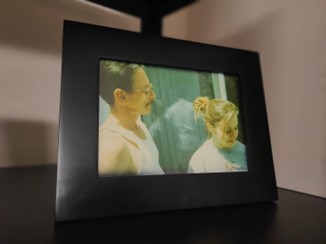
1996 with Greg Reguin
That loss shapes how I think about the importance of mental health care. But it also made asking for help scarier. I was concerned about the stigma around having this in my family history, which is still difficult to address all these years later. But I am grateful that I did. As nurses, we are incredibly good at caring for others, but we also have to care for ourselves to do that work well. I had lots of great support, and I improved in a short amount of time. Clinicians of all types can and should ask organizations to support well-being, but, ultimately, we each have a personal responsibility for the mind and body we present with and use to care for other humans.
There are resources available for clinicians who need support. The 988 Suicide & Crisis Lifeline is available 24/7 by call, text, or chat and provides free, confidential support across the United States. National data show that 988 is helping people. There is very encouraging data coming from that resource.
For clinicians who need a place to start, additional options may include employee assistance programs, peer support programs, hospital or health-system behavioral health services, primary care, and local counseling or crisis resources.
Just remember that help is available: If you are ever in crisis or need immediate support, reach out to a friend, call or text 988, or seek emergency help right away.
On a lighter note, I’ve been enjoying watching the tomatoes I mentioned last month — Cherie, Berry, and Gary — get settled in and start to grow. I also recently had the opportunity to be on the Med-Surg Moments Podcast where I talked a little about our rescue pup, Wilbur, who continues to bring so much fluffy joy (and energy!) into our home. He makes me laugh every day! As promised on the podcast, I have included his picture here as a small “puppy tax” for making it through this message!

Thank you, as always, for the work you do every day and for the care you bring to both your patients and each other. Reach out at President@AMSN.org.